Every December, a familiar warning makes the rounds: turn off the Christmas lights, they’re straining the grid! In a city that glows through the holidays, the concern feels reasonable.
The grid tells a different story.
Holiday lights faded from the load picture
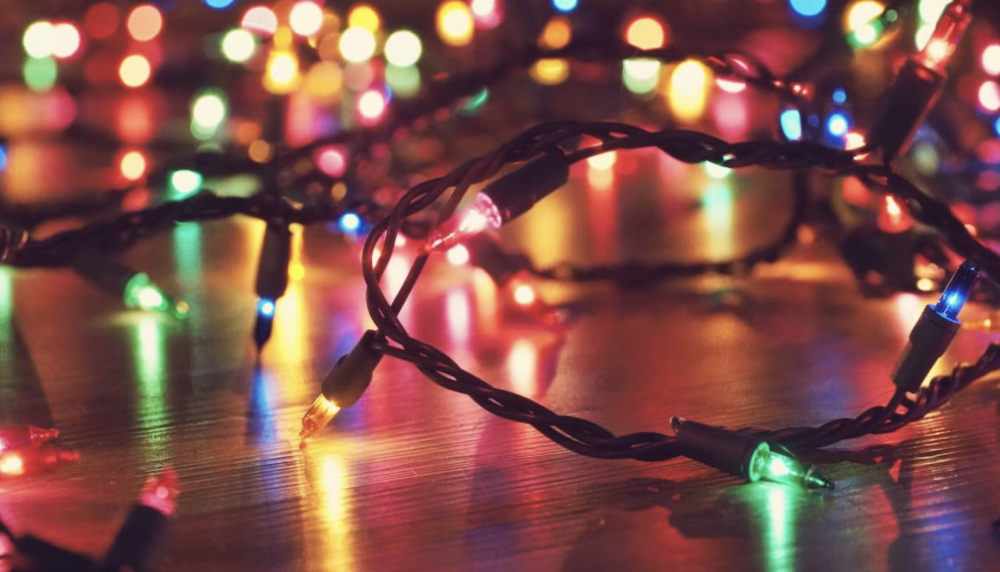
Holiday lighting used to matter. Incandescent bulbs pulled real power: a typical incandescent Christmas light used about 5 to 7 watts per bulb. Modern LED strands use 0.04 to 0.06 watts per bulb. That shift cut decorative lighting demand by roughly 90 to 95 percent. Today, a fully lit tree often draws less electricity than a single space heater running for a few minutes.
In practical terms, one residential heating system can outweigh the electricity use of an entire block of LED holiday lights. Decorative load became predictable, efficient, and easy to plan for. Utilities adjusted. The grid adapted.
December cooking and heating reshapes demand, not decoration
Besides the weather, what moves the grid in December is behavior.
Kids are home from school. Depending on the day, heating or cooling systems cycle on keeping the house comfortable all day long. Hot showers stack. Coffee makers, ovens, and lighting all turn on in the same narrow window.
Electricity demand doesn’t spike because of cheer. It spikes because of synchronization.Southern cities feel this compression more acutely. Winter temperatures peak randomly between warm days pushing our HVAC systems to the brink.
Southern winter challenges hide in plain sight
Winter stress in places like New Orleans comes from a specific mix of conditions:
These pressures don’t look dramatic. They don’t glow. They show up quietly, and all at once.
Holiday kitchens matter more than holiday lights
December cooking tells the load story more clearly than any light display.
Reveillon dinners and holiday gatherings mean ovens running for hours, stovetops active across neighborhoods, and sustained demand layered directly on top of heating (or cooling) load. One evening of holiday cooking can exceed the electricity use of a week’s worth of LED decorations.
December lessons
Holiday lights make an easy villain because they’re visible. December routines do the real work on the grid.
For Southern cities, winter reliability depends less on adding new power and more on reducing the strain that shows up all at once. Energy efficiency lowers the morning surge before it starts. Better insulation, tighter homes, and efficient heating reduce the need for emergency response when cold snaps arrive. Grid resilience investments make those short, sharp peaks easier to absorb without passing costs along to customers.
These are quiet tools. They don’t glow, hum, or announce themselves. They simply shrink the problem.
December shows why that matters. The cheapest kilowatt-hour is the one that never has to be generated at dawn on the coldest morning of the year. The most resilient grid is the one that doesn’t flinch when routines collide.
New Orleans has already learned that preparation costs less than recovery. Applying that lesson to energy efficiency and resilience moves us past seasonal myths and toward a grid built for real life.