Letter to Editor: Let’s Get Smart and Support Grid Hardening Over Solar Subsidies
In a letter to the editor in the New Orleans Times-Picayune, Resilience New Orleans’ board member, Chris Homberg, writes:
Like most small business owners in New Orleans, and as someone with a deep appreciation for our community, I worry our city is becoming more expensive, less reliable and therefore less attractive to residents, local businesses and investment. That’s why I want to weigh in on a recent City Council hearing about providing 10,000 low-income households with rooftop solar subsidies.
On the surface, it sounds great — help families lower their bills and shrink their carbon footprint. But unfortunately, this plan rests on a foundation that no longer exists.
The problem: President Donald Trump’s Big Beautiful Bill gutted the federal incentives that solar installers depended on. Practically overnight, the residential solar market collapsed. PosiGen — the largest rooftop solar provider in Louisiana — has shut down operations here. With local firms gone, who’s left to fulfill the City Council’s rooftop solar promises? Potentially predatory, out-of-state companies with no roots in our community. That’s not clean energy; that’s a setup for fraud. And the people most at risk of being taken advantage of will be the very low-income residents this program is supposed to protect.
Worse, every New Orleanian will be forced to chip in another $2 a month to subsidize this plan. That’s more than it would cost to begin funding Entergy’s proposed resilience initiative — a city-wide grid-hardening program. Unlike rooftop subsidies for 10,000 households, these resilience investments would benefit everyone and disproportionately help the people who need it most: low-income families, the elderly, the sick and food-insecure households who suffer most during power outages.
So, do we want to gamble on a rooftop solar plan that exposes vulnerable families to risk or invest in a grid-hardening strategy that makes power more reliable and affordable for every New Orleanian?
To me, the answer couldn’t be clearer.
New Poll Says New Orleans Residents Want Infrastructure Fixed
A new poll of 520 likely New Orleans voters shows deep concern about the city’s direction: 66% say New Orleans is on the “wrong track.”
The survey highlights infrastructure frustrations as top issues heading into October’s mayoral and city council elections. Frequent power outages, flooding, and potholes were cited as problems that should be “elevated to a priority issue” for city leadership.
Power reliability, in particular, stood out: 92% of respondents said they’ve experienced outages, with 38% reporting they’ve had “a lot” of them.
Read more about the poll here: Summary Memo Resilience New Orleans Poll
News coverage:
WGNO: NOLA on the ‘wrong track’ in new poll
New Orleans Times-Picayune: Most New Orleans residents frustrated with street conditions, drainage, poll finds
Poll: New Orleanians Voters Want Environmental Resilience
Candidates Must Have a Vision for Fixing City’s Infrastructure Challenges

Today, Resilience New Orleans (RNO), a nonprofit focused on New Orleans’ energy resiliency, released findings from a new public opinion poll. The survey asked residents about the city’s infrastructure and the issues they want candidates to prioritize.
“New Orleanians are clear: they want leaders focused on basics like clean water, reliable electricity, and drainage that actually drains,” said Casey DeMoss, executive director of Resilience New Orleans. “People also recognize that resilience isn’t free. A majority say they’re willing to pay more to strengthen the electric grid and protect our city from the next storm. With so many close races this fall, I encourage all candidates to offer real solutions to our infrastructure requirements.”
The pollster, Dr. Silas Lee, also issued a report on the results. The poll surveyed 500 residents via phone and text-to-web interviews between August 5th and 11th. It began before Arthur Hunter exited the mayor’s race and endorsed Royce Duplessis.
Key findings:
- Right/wrong direction: 66% believe New Orleans is on the wrong track; only 22% think it’s headed in the right direction.
- Fed up: An overwhelming 83% of respondents were dissatisfied with the environmental resilience of critical city services to withstand severe weather disruptions.
- Top priorities: When asked “how important is it that New Orleans’ elected leaders focus on infrastructure issues?” 98% said it was very (82%) or somewhat (16%) important
- Willingness to invest: By a two-to-one margin, respondents were very likely or somewhat likely (61% in total) to pay more to improve the city’s severe weather infrastructure. And 81% of respondents said they would definitely (50%) or probably (31%) recommend that the Council approve Entergy’s grid hardening plan.
- Local business: 91% said they strongly or somewhat agree that: “Poorly maintained infrastructure makes it harder for local businesses to succeed.”
- Street views: Just 3% of respondents would you rate the condition of streets in their neighborhood as excellent.
“The silver lining,” DeMoss added, “is that the City Council has a grid hardening plan in front of them right now. It will mostly benefit the most vulnerable communities. Candidates should stop talking around the issue and support real plans before we’re hit with the next major storm.”
To read the full report by Dr. Silas Lee, click here: Summary Memo Resilience New Orleans Poll
Guest Column: Electric Deregulation was a Bad Idea in Other Places. And it’s Bad for New Orleans

Resilience New Orleans’ Executive Director Casey DeMoss in The Times-Picayune.
“New Orleans has long attracted attention be it good, bad and occasionally glitter-covered. From beignets to brass bands, people can’t seem to stay away from our fair city.
Lately, some of the attention we’re getting isn’t so charming: national groups are sniffing around with a risky idea called electric deregulation. It’s being sold as “choice,” but don’t be fooled. Deregulation won’t lower your power bill. It’ll raise it.”
Read the full column here.
Mylar Balloons Culprit of Multiple Power Outages in New Orleans and Other Cities

Resilience New Orleans’ Executive Director Casey DeMoss in The Times-Picayune.
“California adopted a ban in 2023 after the balloons led to power outages and wildfires. Several cities in California passed their own local laws prior to the statewide ban, noted Casey DeMoss, director of Resilience New Orleans.”
How Can We Harden the Power Grid Across New Orleans?

When Hurricane Francine slammed into Louisiana, Resilience New Orleans’ Executive Director Casey DeMoss appeared on WWL First News with Tommy Tucker to discuss what we can do to reinforce our power grid
Casey DeMoss: New Orleans and the Nation Need to Get Serious About Investing in Our Electric Grid
Resilience New Orleans’ Executive Director Casey DeMoss in Real Clear Energy.
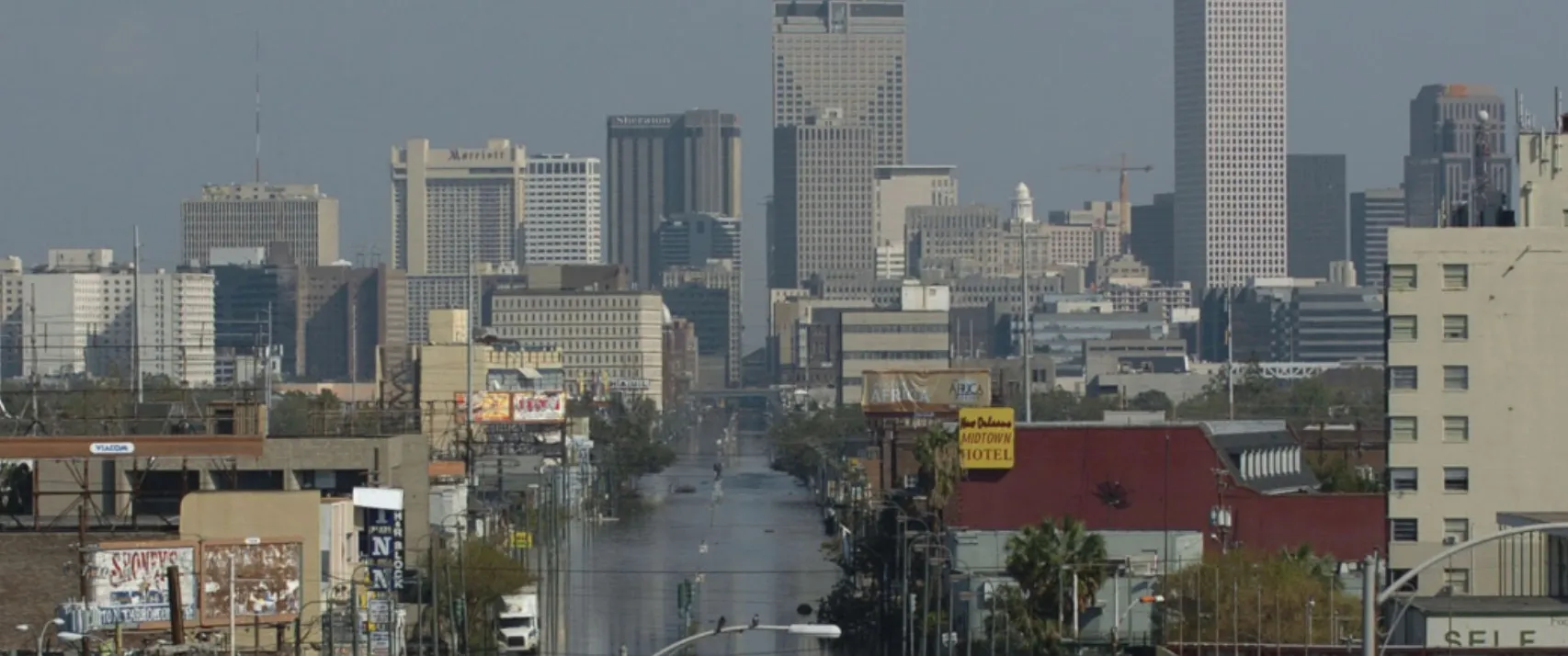
“While all of these challenges are formidable, none of them compare to the greatest problem facing our electrical grid, which is that we have not made the necessary investments to modernize and strengthen our critical infrastructure.
New Orleans struggles to make necessary grid upgrades because we are stuck in a vicious cycle of storm destruction, costly repairs, and then belt tightening by regulators.”
Council Panel Denies Most of Entergy Grid Plan
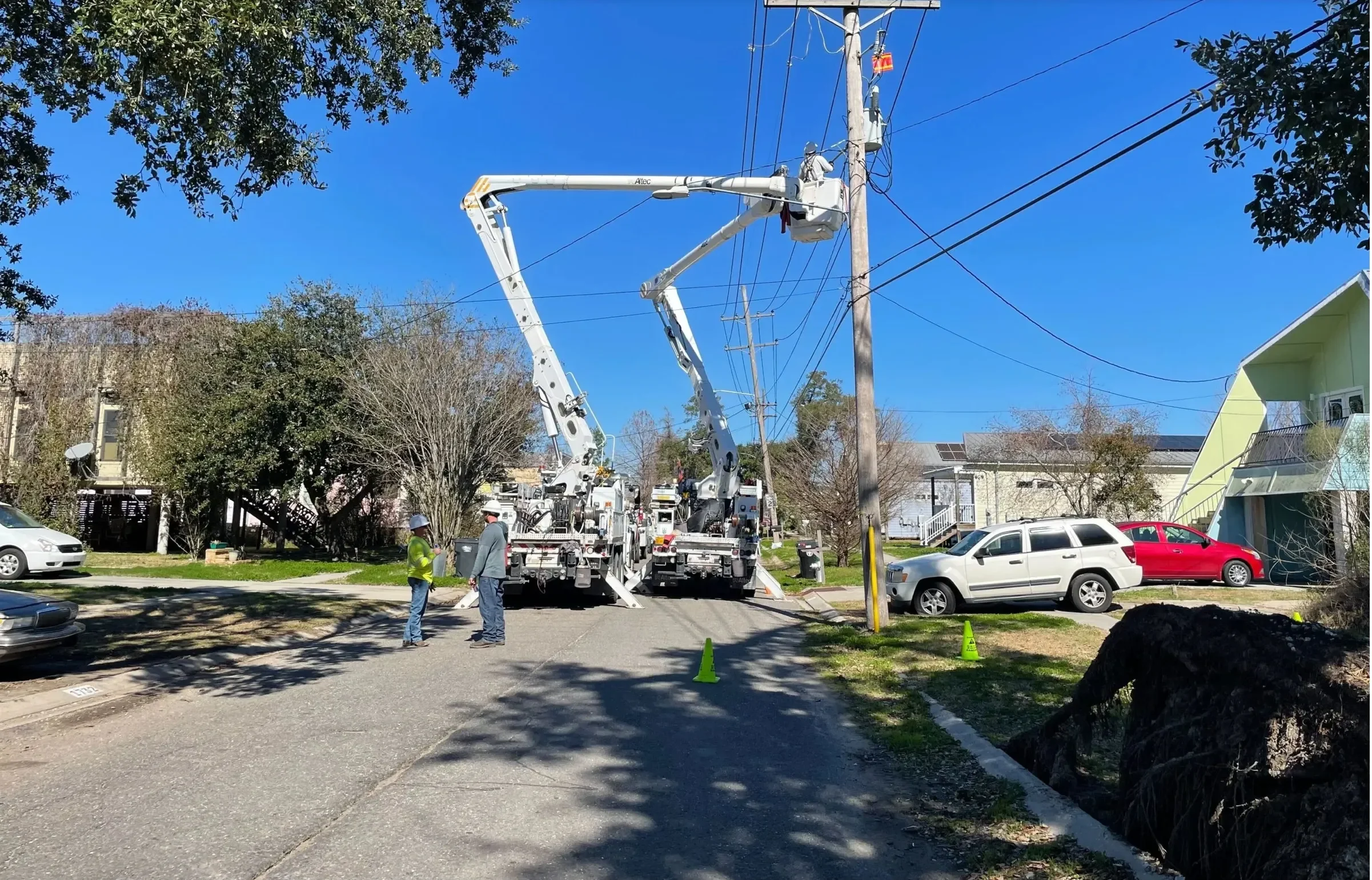
“The proposed project, dubbed “Operation Gridiron” by the utility, involves citywide improvements to power lines, poles and transmission equipment. It is meant to avoid a repeat of the catastrophic failures that followed Hurricane Ida in 2021, leaving most of the city in the dark for more than a week.
There’s near-unanimous agreement that the city’s electrical grid is in need of critical improvements to increase its resiliency, especially in the wake of more frequent and intense freezes, hurricanes and heat waves due to climate change.”
How Entergy New Orleans’ Resiliency Plan Will Benefit the City’s Most Vulnerable Populations

“Based on our research, it is clear that all New Orleans residents stand to benefit from Entergy New Orleans (ENO) resilience investments. HedgeRow’s analysis, using only publicly available data, indicates that a significant portion of those benefits will flow to those experiencing financial, medical, food, or other social vulnerabilities. Higher per capita investments will be made in neighborhoods with a greater percentage of these energy vulnerable populations, and these residents will receive more benefits per capita as a result.”
Letters: Entergy Grid Hardening is Costly but Necessary
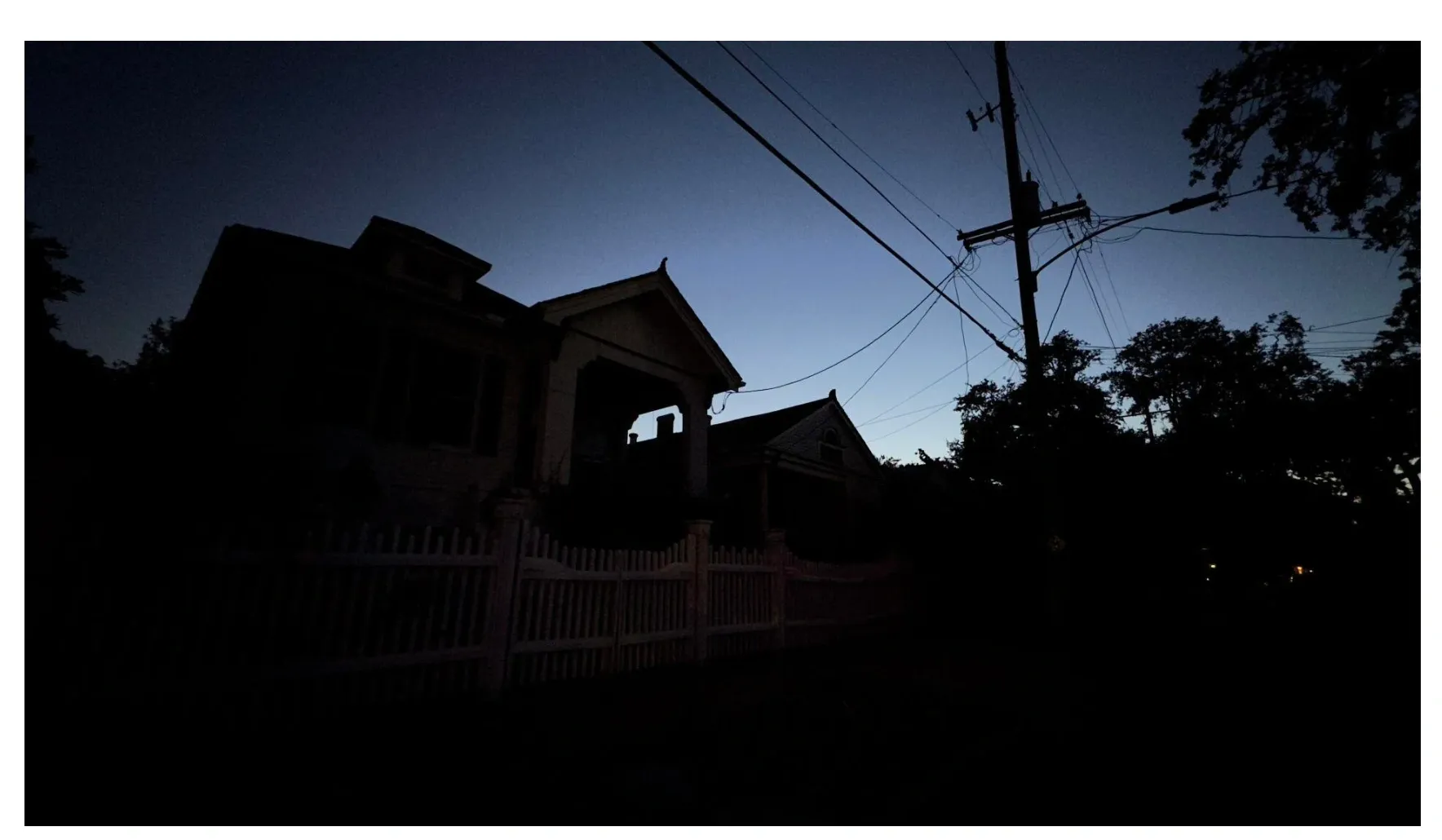
“New Orleans will upgrade its grid either by design or after a disaster.
If we implement a resiliency plan now, vulnerable communities at higher risk due to social, economic, food security, climate vulnerability, transportation and health factors can recover more quickly from severe weather.
But, if we continue to do costly emergency repairs only after massive hurricanes, all customers will end up paying more for a less reliable power grid.”