Mardi Gras demands spectacle. It also demands electricity.
Every float bulb, every sound system, every corner bar humming after the parade depends on a grid that has to perform flawlessly while hundreds of thousands of people pack beneath it.
For years, one glittering detail kept sabotaging that performance: mylar glitter guns and balloons.
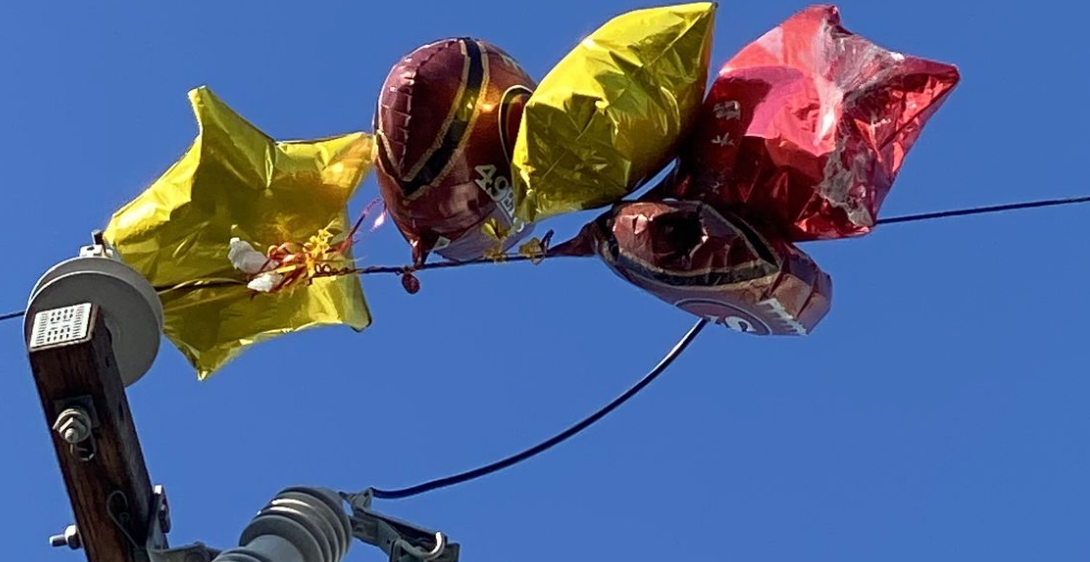
They shimmer beautifully in daylight, but they behave like metal projectiles that inevitably go for the grid.
When a metallic balloon drifts into overhead lines, breakers trip. Entire neighborhoods can go dark. During Carnival, restoration is harder because streets are barricaded, with crowds standing shoulder to shoulder. Line crews cannot simply drive up and fix the problem. A single glitter gun can stall a parade and knock out power to thousands.
The problem was known, but the fix required alignment.
The Policy Shift
In November 2024, the New Orleans City Council adopted an ordinance adding Section 66-292 to the City Code, prohibiting the outdoor release of mylar and other electrically conductive balloons within city limits. Purchase and possession remain legal. Release is the issue.
The goal was direct and practical: prevent avoidable outages before they happen.
Separately, Mardi Gras route rules reinforced prohibitions on confetti cannons and metallic debris along parade corridors. Together, these measures targeted the precise behavior that had repeatedly disrupted Carnival in prior years.
This was not symbolic legislation. It addressed a documented operational risk.
Entergy’s Role
Entergy New Orleans had been vocal about the impact. Leadership and line supervisors consistently explained the physics and the consequences. Mylar conducts electricity. Contact with energized lines can trigger protective devices. Restoration on a parade route is slow and complex because crews must navigate safety protocols in dense, restricted environments.
The company did not ask residents to celebrate less. It asked them to celebrate smartr and that clarity mattered.
The Community Response
And here is the real headline: it worked.
This Mardi Gras season rolled through Fat Tuesday without the widespread mylar-triggered outages that had plagued prior years. Fewer emergency responses. Fewer stalled floats. Fewer darkened neighborhoods mid-parade.
The lights stayed on.
Policy only succeeds when the public participates. Residents adjusted. Krewes complied. Vendors adapted. Enforcement backed the rule with real consequences. The result was visible reliability.
A Blueprint for Resilience
This is a case study in how infrastructure protection should function in New Orleans.
No grandstanding. No culture war. No finger-pointing.
Just coordinated problem-solving.
Resilience is often discussed in terms of billion-dollar capital projects and sweeping climate strategies. Those matter. But resilience also lives in the practical decisions that eliminate predictable failure points.
A metallic balloon seems trivial until it stalls a parade and blacks out a neighborhood.
Removing that vulnerability preserved the spectacle, protected line–workers, and maintained continuity for neighborhoods hosting the largest free party in America.
That is a win for Entergy.
A win for the City Council.
A win for residents.
And a reminder that when New Orleans aligns around a fixable problem, we can keep the brass bands playing and the lights burning bright.